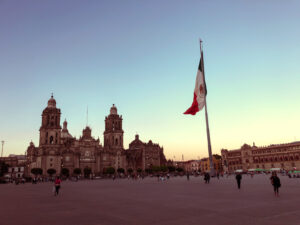
Latin America & the Caribbean at a Glance
- Population: ~668 million across 33 countries and territories
- Most Urbanized Region on Earth: 80% of the population lives in cities
- Major Religions: Christianity (~90%) — Catholic (~69%), Evangelical/Protestant (~19%), other Christian (~2%); non-religious (~8%); other (~2%)
- Largest Cities: São Paulo, Brazil (23.2M) · Mexico City, Mexico (23M) · Buenos Aires, Argentina (15.5M) · Rio de Janeiro, Brazil (13.7M) · Bogotá, Colombia (11.3M) · Lima, Peru (11M) · Santiago, Chile (6.9M) · Guadalajara, Mexico (5.3M) · Caracas, Venezuela (2.9M) · Havana, Cuba (2.1M)
- Major Languages:
- Spanish — 18 countries across Central and South America
- Portuguese — Brazil (~215 million speakers)
- French — Haiti, French Guiana, Martinique, Guadeloupe
- English — Jamaica, Belize, Trinidad & Tobago, Guyana, Caribbean islands
- Dutch — Suriname, Dutch Caribbean islands
- Indigenous languages — Quechua, Guaraní, Aymara, Nahuatl, and hundreds of others still spoken across the region
From the megacities of Brazil and Mexico to the isolated tribal villages of the Amazon basin, Latin America is one of the most diverse and contradictory regions on earth. Vast natural beauty coexists with deep economic poverty. A thriving urban middle class lives alongside communities with almost no access to basic resources. And in this complexity, the gospel is moving.
The story of evangelical Christianity in Latin America is one of the great mission narratives of the modern era. In 1900, evangelicals in Latin America numbered approximately 700,000 — roughly 1% of the population. Today they have surpassed 100 million, representing nearly 17% of the region. In Brazil and Guatemala, the evangelical population has reached 41% and 31% respectively. The Americas as a whole are now home to over 35% of the world’s evangelicals. This growth has been driven not primarily by large crusades or foreign missionaries, but by the steady, faithful witness of tens of thousands of local pastors and laypeople planting churches out of a passion for the gospel.
In 1900, evangelicals in Latin America numbered approximately 700,000 — roughly 1% of the population. Today they have surpassed 100 million
Yet the work is far from finished. More than 200 million people in Spanish-speaking South America alone do not yet know Jesus as Lord and savior. Hundreds of unreached and unengaged people groups remain in the Amazon basin and across remote regions of Central America and the Caribbean. Secularism is rising — the main challenge to Catholic dominance in Latin America has come not from Protestantism but from secularism — and syncretism blends Christian vocabulary with indigenous spiritual traditions in ways that can obscure the gospel. Crime, corruption, and economic instability create ongoing pressure on church communities, particularly in urban areas.
The greatest need today is not more evangelism alone — it is depth.
The evangelical church in Latin America is large and growing, but theological training has not kept pace with numerical growth. Pastors lead congregations with little access to sound biblical resources. Seminaries serve urban centers while rural and indigenous churches go largely unresourced. The energy and relational warmth of Latin American church culture is a tremendous gift — and it deserves to be matched with theological rootedness.
Global Christian Book Fund partners with Bible School, parachurch organizations and church networks across Latin America and the Caribbean to put the right resources in the hands of the pastors and leaders who are building the church in one of the world’s most spiritually dynamic regions.
Stories from Latin America & the Caribbean
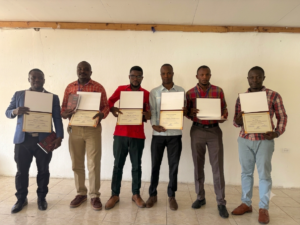
More Than a Bible: Training and Equipping Haiti’s Pastors