Asia Pacific at a Glance
- Population: ~4.8 billion (60% of the world’s population)
- Countries: 48
- Major Religions: Islam (~25%), Hinduism (~25%), Buddhism (~12%), Folk/Traditional religions (~9%), Christianity (~8%), religiously unaffiliated (~21%). Asia is home to the world’s largest populations of Muslims (Indonesia, 242M), Hindus (India), and Buddhists (China, 244M).
- Largest Cities: Tokyo, Japan (37M) · Delhi, India (34.7M) · Shanghai, China (30.5M) · Dhaka, Bangladesh (24.7M) · Beijing, China (22.6M) · Mumbai, India (22.1M) · Osaka, Japan (18.9M) · Karachi, Pakistan (20M+) · Jakarta, Indonesia · Manila, Philippines
- Major Languages:
- Mandarin Chinese — China, Taiwan, SE Asia
- Hindi — India
- Arabic — Middle East
- Bengali — Bangladesh, India
- Japanese — Japan
- Indonesian/Malay — Indonesia, Malaysia
- Urdu — Pakistan
- Korean — Korean Peninsula
- Tamil — South India, Sri Lanka, Singapore
- English — official or widely used in India, Philippines, Singapore, Hong Kong
Asia is home to 60% of the world’s population — and only 4.4% of Asians are evangelical Christians. Of the 4.8 billion people who call Asia home, nearly half live with little to no access to the gospel. The Asia-Pacific Rim is the heartland of the 10/40 Window, housing many of the least-evangelized people groups on earth, and the greatest concentration of unreached peoples anywhere.
The gospel has been present in Asia far longer than most assume. It arrived in China well over a thousand years before Hudson Taylor famously entered China’s interior provinces in 1865. The gospel has repeatedly come to Asia — but it has not always been received. Buddhism, Islam, Hinduism, Taoism, Confucianism, and deep animistic traditions have shaped the spiritual landscape of billions. Religious and cultural identity are tightly woven together, making the cost of following Christ high. Believers and seekers across the region regularly face social pressure, family rejection, and in many countries, active persecution.
Asia is home to more than 415 million Christians, growing at a rate of 2.11% annually.
Yet the church in Asia is growing. Asia is home to more than 415 million Christians, growing at a rate of 2.11% annually. Significant geopolitical barriers limit access to two-thirds of Asia-Pacific peoples, making partnership with the estimated 100 million local believers essential for gospel advancement. Nations with greater religious freedom — South Korea, Australia, the Philippines, Singapore, Hong Kong — have become strategic bases for both local and international missions. South Korea alone has emerged as the world’s second-largest missionary-sending nation, with more than 30,000 missionaries serving in over 170 countries.
The rise of indigenous Asian Christianity is one of the most significant developments in global missions. As Asian churches have matured, they have become a sending force. The vision that took root among western missionaries after World War II is now being carried forward by Asian believers themselves. What may be unfolding in the 21st century is something the church has long prayed for: a culturally rooted, indigenous Asian Christianity beginning to transform the continent from within.
The growth of the church in Asia is outpacing the development of trained pastoral leadership.
This is where books and theological resources play a critical role. The growth of the church in Asia is outpacing the development of trained pastoral leadership. The same gap that defines the crisis in Africa is present across Asia — and in many places, access to sound theological literature is even more constrained by language, geography, and government restriction. Global Christian Book Fund works across the Asia-Pacific region, partnering with Bible schools, parachurch ministries and church networks to resource the next generation of Asian church leaders.
Stories from Asia Pacific
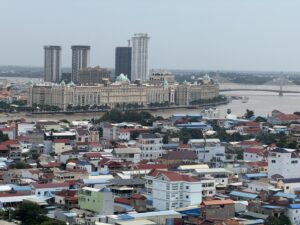
5,400 Books in Khmer: Equipping Pastors Across Cambodia